
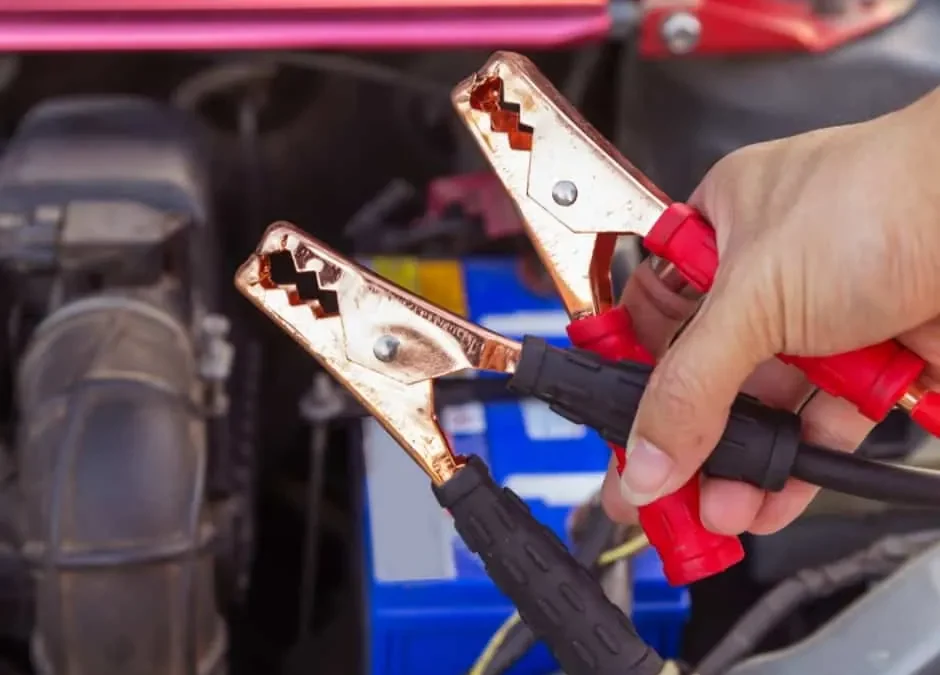
A failed boost is a reason to reassess, not proof that you need a new battery. Stop repeated attempts, describe what the vehicle does and check its specific instructions. You may need a suitable roadside assessment or towing to a repair shop. Smoke, fire, injury or immediate danger calls for emergency help.
You have already tried the obvious fix, but the car still will not start. That is especially frustrating outside a Calgary workplace or after a cold night at home. The useful next question is not which component to buy. It is what you can safely observe, what help is available and where the vehicle should go if it cannot leave under its own power.
This guide is about the decision after an unsuccessful boost. For arranging the initial service, see battery boosting in Calgary. A boost, electrical diagnosis, battery replacement and towing are different services; confirm which one the operator can provide before booking.
Calgary Tow Truck connects you with independent operators. Share the vehicle, location and access details, then confirm service availability and the complete quote.
Stop and describe the symptoms
Tell the person taking your call whether the engine turns over, whether you hear clicks, or whether the dashboard stays dark. If the engine cranks normally but never fires, say exactly that. These observations help someone assess the request, but none proves a particular fault. A dashboard that lights up is not a reliable battery-health test.
Record what happened before the failure. Was the car parked overnight? Did it stall while driving? Did someone already connect a booster pack? Give the vehicle year, make, model and powertrain, including whether it is a hybrid or electric vehicle. A clear account is more useful than saying the alternator has failed when nobody has tested it.
Avoid repeatedly cranking the engine or experimenting with cable connections. Use the starting limits and jump-start procedure in the correct owner’s manual. If those instructions are unavailable or unclear, leave the work to someone qualified. Do not treat a procedure for another vehicle as interchangeable with yours.
A failed boost does not identify the faulty part
A starting problem can involve the battery, its connections, the starting system or another vehicle system. Different issues can produce similar symptoms. Even the phrase “it needs a boost” describes a proposed intervention, not a confirmed diagnosis. Explain what you observed rather than choosing a repair from a symptom checklist.
Ask whether the requested visit includes testing, a boost attempt or only assistance with starting. Then ask what happens if the vehicle still will not run. Our roadside assistance options explain the broader service choices, while a repair shop can confirm what diagnostic work it can undertake after arrival.
There is also a difference between starting successfully and being ready for a normal journey. If the car starts and then stalls, or warning lights remain, do not assume another boost will resolve the underlying issue. Arrange professional advice about the next step rather than setting off simply to avoid a towing charge.
Know when to stop trying
Do not attempt to boost a damaged, leaking or suspected frozen battery. Manufacturer warnings matter, particularly after severe cold. A battery that has thawed is not automatically safe to jump-start. If you notice an unusual smell, visible damage or another concerning condition, describe it before anybody starts work.
Hybrid and electric vehicles require their own procedures. Do not confuse the low-voltage electrical system with the traction battery. This article does not provide cable-connection instructions or permission to access high-voltage components. The vehicle’s manual and the attending professional should determine what can safely be attempted.
At home or work, wait somewhere safe while keeping the operator informed about access. On a busy roadway, avoid standing between vehicles or attempting repairs beside moving traffic. If emergency responders attend, follow their directions. Our Alberta roadside worker safety guide also explains the responsibilities of approaching drivers.
Calgary Tow Truck connects you with independent operators. Share the vehicle, location and access details, then confirm service availability and the complete quote.
Decide whether to arrange a shop visit
If appropriate roadside assistance cannot resolve the no-start, discuss towing your car to a mechanic. First contact the receiving shop. Ask whether it accepts non-running vehicles, whether it can inspect your model and where the operator should unload. A booked tow does not reserve diagnostic time.
Confirm the receiving address instead of relying on a business name alone. Dealership service entrances may differ from their sales entrances. Ask about opening hours, after-hours permission and key handoff. If the first shop cannot accept the car, agree on another destination before transport is dispatched.
Tell the towing operator whether the vehicle can roll, steer and select neutral. Report a missing key, electronic parking brake problem or locked wheel. Do not force a release to make collection easier. The operator needs those details to select a suitable loading approach, particularly for AWD vehicles or restricted parking spaces.
Calgary access details that help
For a workplace parking lot, give the actual vehicle entrance, nearest landmark and stall location. For an underground garage, provide the posted clearance, level, ramp arrangement and gate access. See our low-clearance towing information before assuming a conventional truck can reach the car.
On Deerfoot Trail, Stoney Trail or another divided road, give the direction of travel and nearest exit as well as a map pin. A pin can place the vehicle on the wrong carriageway. Describe whether you are on a shoulder, in a parking area or somewhere with immediate traffic exposure.
If you have already requested help elsewhere, establish whether somebody has been dispatched before making a second booking. Explain any cancellation arrangement directly with that provider. Keeping one clear plan helps avoid two vehicles arriving for the same job or unexpected cancellation charges.
Confirm the quote before changing the plan
Ask what the visit charge covers if the boost attempt is unsuccessful. If towing becomes necessary, obtain the transport quote separately and confirm whether the original visit charge still applies. Do not assume the first payment includes repairs, parts, testing and delivery to a shop.
For towing, confirm loading, distance, restricted-access work, waiting and taxes. Our Calgary towing cost checklist gives you the questions to ask without suggesting a universal price. Save the agreed destination and scope so a change can be discussed before additional work begins.
If you may already have roadside benefits, check the relevant assistance process first. Our battery-boost coverage guide explains the difference between an existing benefit and a separately booked service. Coverage should be confirmed for your circumstances rather than assumed from a card or policy name.
Questions after an unsuccessful boost
Does a clicking sound prove that the battery is dead?
No. Describe the sound and other symptoms, but do not use it as a diagnosis. Appropriate testing is needed before deciding which component needs attention.
Can a towing operator guarantee an electrical diagnosis?
Do not assume that diagnostic work is included. Ask what equipment and assessment the specific operator can provide, and whether further testing requires a repair shop.
What if my car starts but dies again?
Tell the operator exactly when it stalled and about any warning lights. Do not regard repeated boosts as a permanent solution. Ask whether assessment or transport is the appropriate next step.
Can I leave my car at a closed mechanic?
Only after arranging acceptance and drop-off instructions with the shop. Confirm where it may be left, who receives the keys and what happens if delivery is delayed.
Still unable to start your car?
Calgary Tow Truck connects you with independent operators. Share the vehicle, location and access details, then confirm service availability and the complete quote.
Reference: Vehicle-specific jump-start safety instructions. Follow the instructions for your exact vehicle and circumstances.