
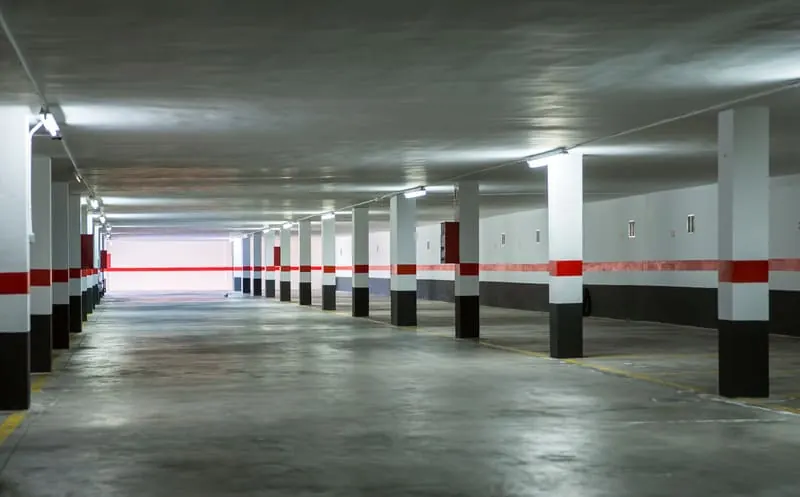
Before booking help for a car stranded underground, collect the vehicle location, posted entrance clearance, level, stall and gate arrangements. Tell the operator whether the car can roll, steer or select neutral. These details help determine whether roadside assistance can reach it or whether a planned low-clearance recovery is needed.
A car that will not start in a downtown Calgary parkade presents two separate problems: the vehicle fault and the route to the vehicle. A street address alone does not solve the second one. The entrance may be around the block, the ramp may turn sharply, and security may need to open a gate for the operator.
This checklist is for arranging help with your own disabled vehicle. It does not cover removing somebody else’s car or deciding parking-enforcement authority. For the service itself, see low-clearance towing in Calgary. The aim here is to make the access conversation clear before equipment arrives.
Calgary Tow Truck connects you with independent operators. Share the vehicle, location and access details, then confirm service availability and the complete quote.
Identify the vehicle entrance, not just the building
Begin with the building name and street address, then describe the vehicle entrance separately. In downtown and Beltline buildings, the postal entrance, visitor entrance and resident parking entrance may be different. A map pin is useful, but supplement it with the street or lane used to enter.
Give the parking level and stall number, and explain whether the car is nose-in, backed-in or parked against a wall. Mention nearby pillars, tight neighbouring spaces or a dead-end aisle. Only take photographs from a safe position. Do not climb onto structures or enter a ramp’s traffic path to obtain a better view.
If mobile reception is poor underground, arrange a reliable callback method before the operator arrives. Tell reception or security how to contact you, where appropriate, and identify a safe meeting point. Avoid leaving the operator waiting at a closed gate while your phone has no signal.
Record the posted height and other restrictions
Read the posted entrance clearance and report it exactly, including whether the sign uses metres or feet and inches. Do not estimate from the height of your own car. Note any additional signs inside the route, but do not walk into an unsafe area to search for them.
The entrance sign is only part of the assessment. Ramps, changes in slope, low pipes, doors and tight turns may affect a recovery vehicle’s route. Share what you can observe and ask the building contact about access restrictions. The operator still needs to confirm whether the equipment and loaded vehicle can move safely through the space.
Do not promise that a truck will fit because a delivery van entered previously. Loaded dimensions and turning requirements differ. Our flatbed towing information explains the transport option, but choosing a flatbed for the road journey does not establish that it can enter the garage.
Separate the vehicle fault from the access problem
Describe what happens when you try to start the car: silence, clicking, normal cranking or another symptom. These are observations, not diagnoses. A suitable battery-boost service may be relevant, but a no-start does not automatically mean that a boost will work or that it can be attempted safely.
If a boost has already failed, say so. Our roadside assistance information helps distinguish the type of visit you are requesting. Ask whether testing or other work is included and what happens if the car remains immobile. Do not assume that every roadside visit includes a full mechanical diagnosis.
For a flat tire, confirm whether you have a usable spare and wheel-lock key. For locked keys, explain that issue before booking a tow. Different problems may call for different services. A clear description prevents access planning from being based on a car that can roll when it actually cannot.
Calgary Tow Truck connects you with independent operators. Share the vehicle, location and access details, then confirm service availability and the complete quote.
Tell the operator about locked wheels and missing keys
Report whether the car can steer, roll and select neutral. Also mention an electronic parking brake that will not release, a missing key, AWD or electric powertrain, and any visible wheel or suspension damage. Do not force the gear selector or attempt an unfamiliar manual release to make collection easier.
The operator may need equipment to move an immobilized vehicle within the garage and a separate plan for road transport. Ask whether removal and onward delivery are both included in the request. A vehicle being accessible to a person does not mean it is accessible to the equipment needed to recover it.
Do not push the car down a ramp or pull it with another vehicle. A narrow slope leaves little room to correct a problem. Leave equipment selection, movement and securing to the attending professional. If the vehicle is blocking a route, inform the building contact rather than improvising a recovery.
Arrange gates, permissions and a safe meeting point
Ask the property manager or security team what is required for a recovery vehicle to enter. Find out who can open the gate, whether the operator needs an escort and whether access is limited at certain hours. Arrange a person who can help at the agreed time rather than relying on a gate being left open.
Do not disable doors, wedge open security equipment or share access credentials publicly. Use the building’s normal process for admitting the operator. If you cannot remain onsite, ask both the operator and building contact what authorization and key arrangements they require.
Keep people clear of the working area. Do not stand between the disabled car and a pillar, and do not try to guide equipment unless the operator specifically directs a safe task. Report fire, smoke or immediate danger through emergency services and follow building emergency instructions.
Plan the destination before extraction starts
Removing the car from underground is not necessarily the end of the job. If it still cannot be driven, agree on the next destination before movement begins. Breakdown towing to a mechanic requires a shop that will accept the vehicle and a suitable unloading point.
Call the receiving shop to confirm its entrance, hours and key handoff. For an after-hours arrival, obtain permission and instructions first. Do not assume the operator can leave the car in a public lane or outside a locked service gate. An alternate destination should be agreed if the original plan becomes unavailable.
Ask whether extraction, any transfer between vehicles, road transport, waiting and taxes are included in the quote. Our towing cost checklist helps you compare the full task. Restricted access can change the work involved even when the receiving shop is nearby.
Parkade recovery questions
Can a regular tow truck enter my underground garage?
That cannot be confirmed from the address alone. Provide posted clearance, ramps, turns, the vehicle’s position and condition. The operator must assess the route and equipment.
Do I need the building manager onsite?
It depends on the building’s access arrangements. Confirm who can admit the operator and handle gates or required permissions, especially outside normal reception hours.
What if my car cannot go into neutral?
Tell the operator before dispatch. Do not force the controls or push the vehicle toward the exit. Non-rolling wheels can require a different recovery approach.
Can I book only a battery boost in a parkade?
You can ask whether a suitable operator can access and assess the car. Explain the symptoms and clearance first, and confirm the fallback plan if the boost is unsuitable or unsuccessful.
Need help reaching a car underground?
Calgary Tow Truck connects you with independent operators. Share the vehicle, location and access details, then confirm service availability and the complete quote.