
How Long Does a Tow Truck Take in Calgary? Response Times
How long does a tow truck take in Calgary? Most professional towing companies arrive within 20–45 minutes for calls inside Calgary city limits during normal conditions. That number changes based on where you are, what time of day it is, the weather, and what kind of service you need. A highway shoulder on Deerfoot Trail during rush hour in a January blizzard is a very different call than a dead battery in a Beltline parking lot on a Tuesday afternoon. This guide breaks down realistic response times for every common scenario so you know exactly what to expect — and how to get help faster.
⏱️ Average Tow Truck Response Times in Calgary
🏙️ Inner Calgary (downtown, Beltline, inner suburbs): 15–30 minutes
🛣️ Calgary highways (Deerfoot, Stoney, Crowchild): 15–35 minutes
🏘️ Outer suburbs (Seton, Evanston, Legacy, Tuscany): 25–45 minutes
🌾 Surrounding communities (Airdrie, Okotoks, Cochrane): 30–55 minutes
❄️ During winter storms or peak demand: 45–90+ minutes (all providers)
Response Times by Calgary Area
Calgary stretches over 800 square kilometres. Where you are within the city significantly affects how quickly a tow truck can reach you. Here are realistic response times for different areas based on typical daytime, fair-weather conditions:
These times assume normal conditions. During rush hour, winter storms, or peak demand (like a Calgary-wide cold snap causing mass dead batteries), wait times across all providers increase significantly. For coverage details in specific areas, see our NE Calgary, SE Calgary, SW Calgary, and NW Calgary towing guides.
6 Factors That Affect Tow Truck Response Time
1. Your location. A call from downtown Calgary reaches a tow truck in 15 minutes. A call from a gravel road outside High River takes 40–55 minutes. The further from a main corridor, the longer the wait.
2. Time of day. Early morning (6–8 AM) and late afternoon (4–6 PM) rush hours slow everything down. Late-night calls (11 PM–5 AM) often have faster response because roads are clear — though fewer trucks may be on duty.
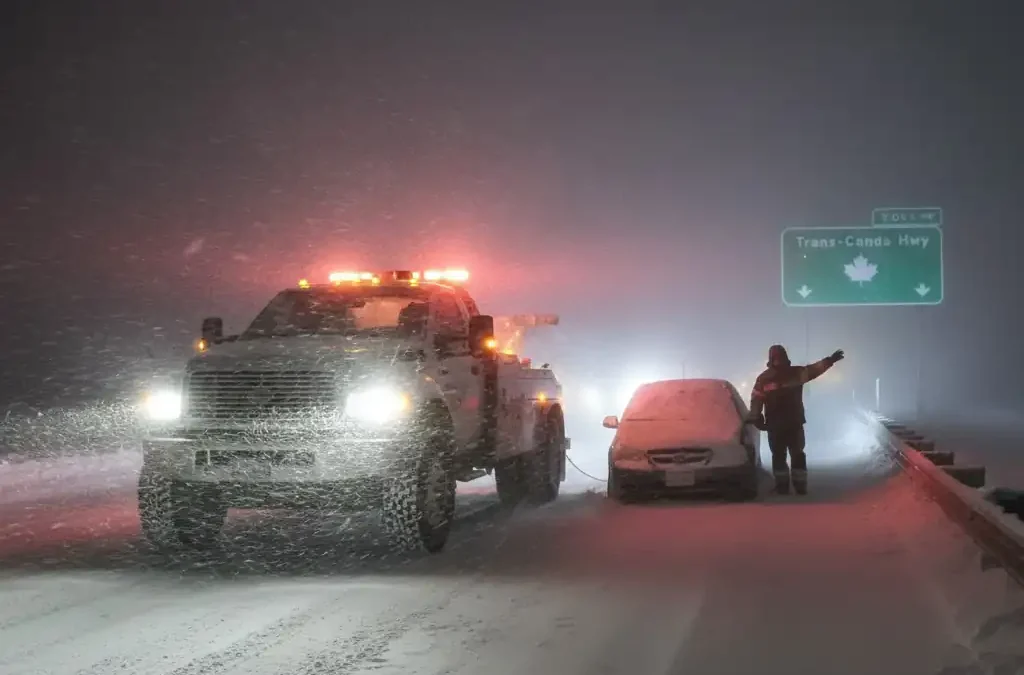
3. Weather. This is the single biggest factor in Calgary. A -30°C cold snap causes hundreds of dead batteries simultaneously. A blizzard creates multiple accidents and slide-offs. During severe winter events, every tow truck in the city is busy and wait times can stretch to 60–90+ minutes across all providers. Our winter towing guide covers how to stay safe during extended waits.
4. Equipment needed. A standard wheel-lift tow truck is the most common and fastest to dispatch. If your vehicle needs a flatbed (AWD, luxury, or accident-damaged vehicle) or heavy-duty tow truck (large truck, RV, commercial vehicle), the response may take longer if the right truck is not immediately available.
5. Current demand. Towing companies handle calls on a priority basis. If five calls come in at once, the highway breakdown gets priority over the dead battery in a residential driveway. More trucks on the road means shorter waits — companies with larger fleets can handle surge demand better.
6. How accurately you describe your location. A GPS pin sent via text message gets a truck to you faster than “I’m on Deerfoot somewhere near the south end.” Vague descriptions add 5–15 minutes while the dispatcher and driver try to find you. Be as specific as possible — direction of travel, nearest exit or overpass, and any visible landmarks.
How to Get a Tow Truck Faster in Calgary
You cannot control the weather or traffic, but you can control several factors that speed up your response:
Share your exact GPS location. Drop a pin in Google Maps or Apple Maps and text it to the dispatcher. This eliminates guesswork and routes the driver directly to you. On a phone call, say: “I am sending you a GPS pin right now.”
Know your vehicle details. Year, make, model, and colour. This helps dispatch send the right truck the first time. If you need a flatbed (AWD, electric, or luxury vehicle), mention that upfront — sending the wrong truck and then re-dispatching doubles your wait time.
Describe the problem clearly. “Dead battery,” “flat tire on the right rear,” “engine died and won’t restart,” or “collision, vehicle not driveable.” Clear information means the operator arrives with the right equipment and can start work immediately.
Call a company directly — not a broker. Third-party dispatch services (apps, websites that “find you a tow”) add a middleman step. When you call a towing company directly, your call goes straight to their dispatcher who assigns a truck immediately.
Have our number saved in your phone before you need it. Searching “tow truck near me” on a freezing highway with a dying phone wastes critical time. Save (587) 885-2326 in your contacts now so you can call with one tap when the time comes.
Fast Dispatch. Honest ETAs. No Runaround.
We tell you exactly when we will arrive — and we show up when we say we will.
Response Times by Service Type
Not all roadside calls require a tow truck. Different services have different dispatch patterns:
Why Winter Storms Cause Longer Wait Times
The most frustrating wait times in Calgary happen during winter weather events. Here is why — and what to expect:
Cold snaps trigger mass battery failures. When Calgary hits -25°C or colder, hundreds of car batteries die simultaneously across the city. Every towing and roadside company is flooded with calls. On the worst mornings, even a 60–90 minute wait for a battery boost is common.
Blizzards cause multi-vehicle pileups. A whiteout on Deerfoot Trail can produce 10+ collisions in minutes. Every available truck is dispatched to accident scenes, and non-emergency calls (dead batteries, flat tires in driveways) wait until trucks free up.
Tow trucks are slowed too. The same ice and snow that caused your breakdown also slows the tow truck coming to help you. A truck that normally reaches you in 25 minutes may take 40+ minutes on icy roads.
What to do during long waits: Stay in your vehicle with the engine running (check that the exhaust pipe is clear of snow). Use your winter emergency kit for warmth. Keep your phone charged. If the dispatcher gives you an ETA, add 50% for storm conditions and plan accordingly.
AMA vs Direct Towing Company: Response Time Comparison
Many Calgary drivers rely on AMA (Alberta Motor Association) for towing. Here is how response times typically compare:
AMA is a valuable service — but during peak demand (cold snaps, storm days), their centralized dispatch model can create bottlenecks. Having a direct towing company number saved in your phone gives you a backup option when AMA wait times are long. For more on how insurance and memberships cover towing, see our Alberta insurance and towing guide.
What to Do While Waiting for a Tow Truck
On a highway: Stay inside your vehicle with hazards on and seatbelt fastened. Do not stand outside, behind, or near your vehicle. If you need guidance specific to Deerfoot, see our Deerfoot Trail breakdown guide.
In a parking lot or residential area: You can safely wait outside the vehicle if conditions allow. Move to a warm building if one is nearby and tell the dispatcher where you will be. Make sure the vehicle is accessible for the tow truck (not blocked in).
In winter: Keep the engine running for heat if it still runs — but make sure the exhaust pipe is clear of snow. Use your emergency blanket if the engine will not run. Crack a window slightly for ventilation if the engine is running.
Keep your phone alive. Conserve battery by reducing screen brightness, closing unused apps, and switching to low-power mode. Check CalgaryTraffic.com for live road conditions if you can. A portable power bank is essential for winter driving — see our emergency kit guide.
What Our Dispatch Process Looks Like
When you call (587) 885-2326, here is what happens:
You describe your situation — location, vehicle, problem. This takes about 60 seconds.
We give you an upfront price and honest ETA — no bait-and-switch. If we are backed up, we tell you — we do not give false ETAs to lock you in.
The closest appropriate truck is dispatched. Appropriate means the right type for your vehicle — wheel-lift, flatbed, or service unit.
Truck arrives, problem solved. Whether it is a tow, boost, tire change, fuel delivery, or lockout — we handle it on the spot when possible. For more on tow costs, see our 2026 tow truck cost guide.
💡 Honest ETAs matter. Some tow companies give unrealistically fast ETAs to secure the call, then take much longer. We give you a realistic arrival window. If our truck is 35 minutes away, we say 35 minutes — not 15. Honest ETAs let you plan and reduce stress. You can hold us to it.
Frequently Asked Questions: Tow Truck Wait Times
How long do tow trucks usually take to arrive in Calgary?
In normal conditions, most professional towing companies in Calgary arrive within 20–45 minutes for calls inside city limits. Inner-city locations are typically 15–30 minutes. Highway calls are prioritized and often have similar or faster response. Surrounding communities like Airdrie, Okotoks, and Cochrane add 10–20 minutes.
Why is my tow truck taking so long?
The most common reasons for longer-than-expected waits are winter weather events (cold snaps cause mass battery failures, storms cause multiple accidents), rush-hour traffic, high demand from simultaneous calls, your location being far from the nearest available truck, or the need for specialized equipment like a flatbed or heavy-duty truck.
Is it faster to call AMA or a tow truck directly?
Calling a towing company directly is typically faster because it eliminates the middleman step. AMA dispatches a contractor from their network, adding time to the process. During peak demand, AMA waits can exceed 90 minutes. Having both AMA membership and a direct towing company number gives you the best coverage.
Do tow trucks take longer in winter?
Yes. Winter is peak demand season for towing in Calgary. Cold snaps cause hundreds of simultaneous dead battery calls, storms create multiple accidents, and icy roads slow the tow trucks themselves. During severe weather events, wait times of 60–90+ minutes are common across all providers.
How can I check if a tow truck is actually on the way?
When you call us, we provide a realistic ETA at the time of dispatch. If you have not heard from us within the estimated window, call back and we will give you an update on the truck’s location. Some companies offer live GPS tracking links — ask when you call.
Do highway breakdowns get priority?
Yes. Highway breakdowns are safety-critical — a stopped vehicle on Deerfoot or Stoney Trail at 100+ km/h is at high risk. Most towing companies, including us, prioritize highway calls over non-emergency residential calls like a dead battery in a driveway.
Can I get a tow truck to Airdrie or Okotoks quickly?
Airdrie is typically 25–40 minutes from Calgary dispatch via Highway 2. Okotoks is 30–45 minutes via Highway 2/2A. If you are on the highway corridor between Calgary and these communities, response may be faster as the truck meets you along the route.
What is the fastest way to get a tow truck in Calgary?
Call a towing company directly (not through a broker or app). Have your exact GPS location ready to share. Know your vehicle’s year, make, and model. Describe the problem clearly. Having a towing company’s number saved in your phone before you need it eliminates the time spent searching online during an emergency.
Should I call multiple tow companies to see who arrives first?
This is not recommended. If you call three companies and then cancel two after one arrives, you waste the time of the cancelled drivers and may be charged cancellation fees. Call one reputable company, get a firm ETA, and wait. If the ETA is unacceptable, call a second company — but cancel the first call immediately.
How long does it take once the tow truck arrives?
Once on scene, most towing jobs take 10–20 minutes to load the vehicle. Roadside services like battery boosts or tire changes take 10–30 minutes. Complex recoveries (winching from a ditch, underground parkade extraction) can take 30–60+ minutes depending on the situation.
Save This Number. Call When You Need Us.
Honest ETAs. Fast dispatch. 24/7 across Calgary and surrounding areas.
Battery boost, tire change, fuel delivery, towing — we handle it all.